🔴 War Crossed major Escalation Thresholds
Over the weekend, the Iran conflict has crossed multiple escalation points simultaneously—signalling a shift from contained conflict to a full-spectrum systemic risk event.
⚔️ What Just Happened:
Iran strikes southern Israel
Targets near Israel’s nuclear facility hit; retaliation for Natanz; significant civilian impact.
US–Israel intensify strikes on Iran
Over 8,000 targets hit; critical damage to Iran’s power, gas (South Pars), and water infrastructure.
US issues 48-hour Hormuz ultimatum
Reopen the Strait or face direct strikes on Iranian power plants.
Iran escalates retaliation framework
Threatens Hormuz closure and “irreversible destruction” of oil, energy, and critical infrastructure across the region.
West Asian neighbors of Iran edging toward conflict
Saudi expels Iranian diplomats; probability of broader regional involvement rising.
⚠️ The Real Risk: Infrastructure War:
Water systems now a target
Desalination plants at risk → direct threat to drinking water supply for millions.
Energy systems under attack
Power plants, gas fields, refineries → risk of cascading supply disruptions.
Shift from military to economic targets
The conflict is now aimed at systems that sustain economies, not just territories.
🌍 Why This Matters Globally:
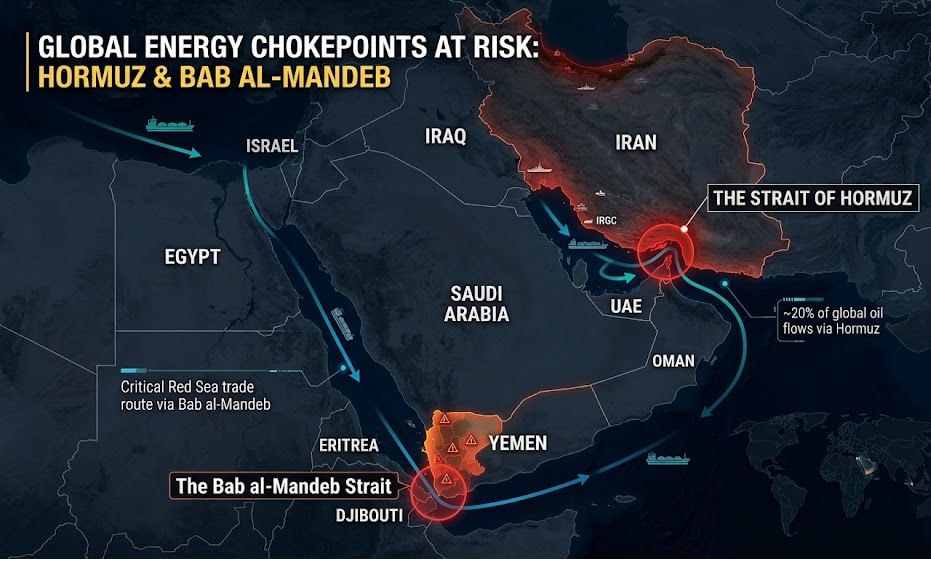
Hormuz = global choke point
Not just oil & gas (~20% flows), but also fertilizers, petrochemical feedstock, helium, and aluminium → cascading impact on global supply chains and food security.
Second-order shocks building
Fertilizers → agriculture & food inflation
Petrochemicals → manufacturing & industrial supply chains
Energy → broad-based inflation and growth risks
🛢 Market Impact:
Oil prices already reacting
Brent near $113, WTI near $100; tail risk toward $150 in escalation scenario.
Emergency buffers activated
IEA releases 400 million barrels—the largest in history.
⏳ The Trigger:
48-hour deadline expires Monday
Markets now hinge on a binary outcome:
→ De-escalation via Hormuz reopening
→ Escalation into full-scale infrastructure conflict
🔥 The Big Shift:
This is no longer a conventional war.
👉 It is a war on molecules — oil, gas, chemicals, and water.
👉 The impact is no longer regional — it feeds directly into global inflation, supply chains, and food systems.
⚡️ Final Take:
Hormuz doesn’t just move oil—it moves the building blocks of the global economy.
