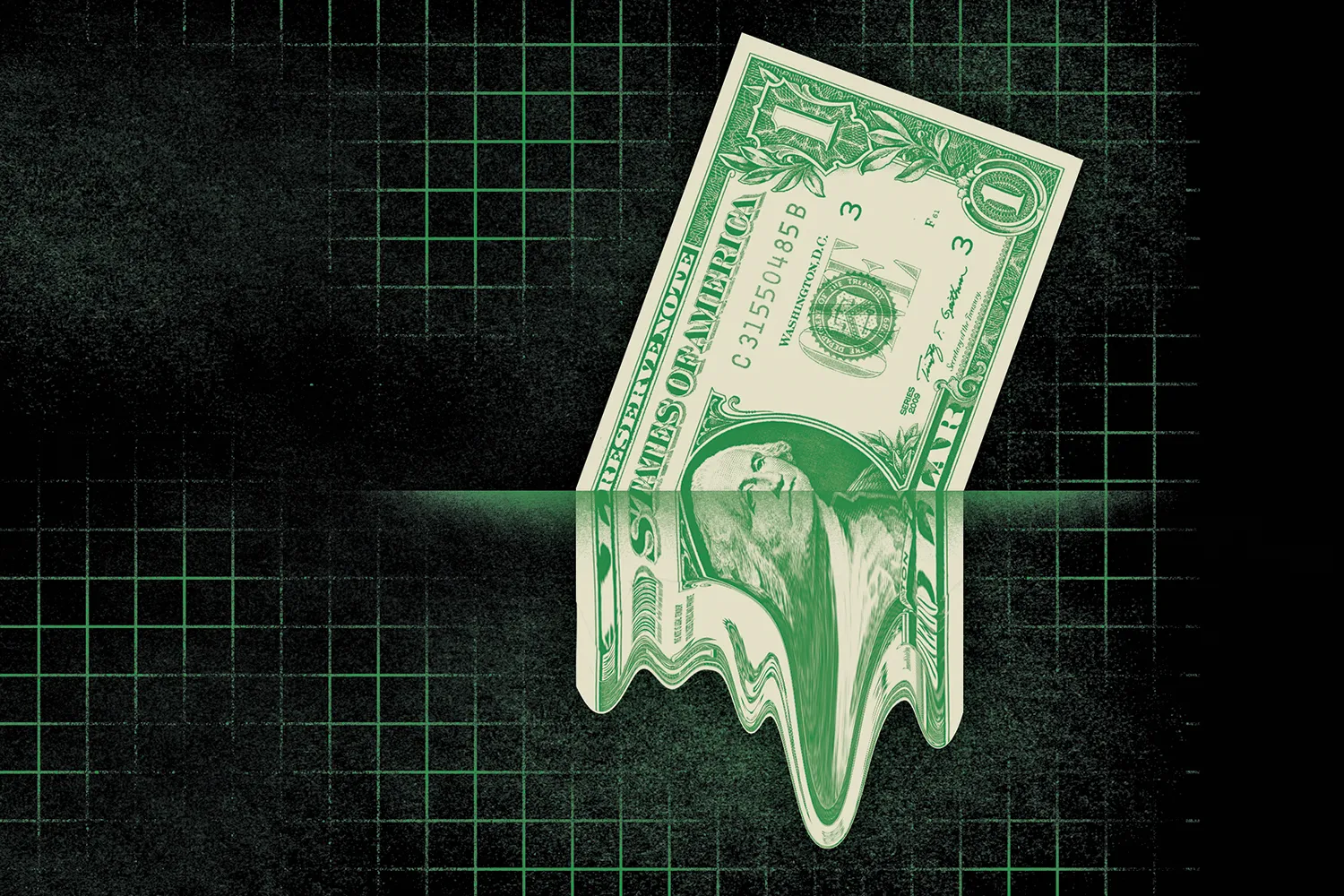
The Dollar Empire Is Quietly Re-Industrializing
🔥 The Dollar Empire Is Quietly Re-Industrializing
Three headlines.
At first glance they look unrelated.
But together they reveal a huge shift in the global economic order.
🌍 1️⃣ Gulf Nations → Trillions Into the U.S.
Oil-rich Gulf countries committing trillions of dollars of investments into the United States over the next decade.
🇮🇳 2️⃣ India → $500 Billion Purchases
India agreeing to buy roughly $500 billion of American goods and energy.
🏭 3️⃣ Reliance → Massive Investment in U.S. Refining
Reliance Industries planning large investments in refining infrastructure inside the United States.
These are not random announcements.
They are signals.
⚠️ The Dollar Empire is preparing to become a producer economy again.
And that is happening because the old system is breaking down.
For decades the system worked like this:
BRICS+ economies and the Global South subsidized the U.S. economy by constantly buying dollars and dollar assets.
That support kept the dollar artificially strong.
And when the dollar stays strong, something important happens.
📉 Currency weakness moves abroad.
Once currency weakness moves abroad, the next step follows naturally.
💸 Inflation moves abroad.
The dollars printed in America flowed across the world — inflating commodities, assets, and industrial expansion across emerging economies.
Then came the next step.
🏭 Factories moved abroad.
Production migrated to the Global South where currencies were weaker, labour was cheaper, and costs were lower.
And when factories move…
🌫 Pollution moves abroad.
The environmental cost of global industrialization was largely absorbed by Asia, BRICS economies, and emerging markets, while the West consumed the finished products.
So the system worked like this:
📉 Currency weakness moved abroad
💸 Inflation moved abroad
🏭 Factories moved abroad
🌫 Pollution moved abroad
While the United States became a financialized consumption economy.
But that system depended entirely on one pillar.
💵 The dollar’s reserve currency privilege.
And that privilege is slowly eroding.
🌏 De-dollarization
🌍 De-globalization
🧭 Multipolar geopolitics
These forces are changing the structure of the global economy.
And now the United States must do something it has not done for decades.
⚙️ Produce again.
But rebuilding production inside America requires something drastic.
The country must suddenly do what it outsourced to the rest of the world.
It must begin to exploit its own economic factors again.
👷 Labor must become cheaper
🏗 Land must become cheaper
🛢 Natural resources must be exploited
🌫 Industrial pollution must increase
And above all…
📉 The dollar must weaken significantly.
Because without a weaker currency, American manufacturing simply cannot compete globally.
And that adjustment has already begun.
Not necessarily first against other fiat currencies…
But against real money.
🥇 Gold
🥈 Silver
For years the dollar has been losing purchasing power against precious metals.
Gold and silver are not merely rising.
⚠️ The dollar is falling against real money.
Over time this adjustment will spread further.
It will begin appearing against currencies of the BRICS+ and Global South economies.
🇨🇳 China has already started moving in that direction.
Eventually the shift will reach multiple currencies, including:
🇮🇳 The Indian rupee.
Now those three headlines make perfect sense.
💰 Foreign capital flowing into America
⚡️ Foreign demand supporting American production
🏭 Global companies investing in U.S. industrial infrastructure
These are early signals of America preparing for a new economic reality.
📌 The Dollar Empire is being forced to return to the old-fashioned economics of production.
And that transition will almost certainly happen alongside a major structural devaluation of the U.S. dollar.
Because once the reserve currency privilege fades, the global system resets.
And when that happens…
💰 The dollar will have to discover its real value.
