How the West Asia War Is Rewiring India’s Skies
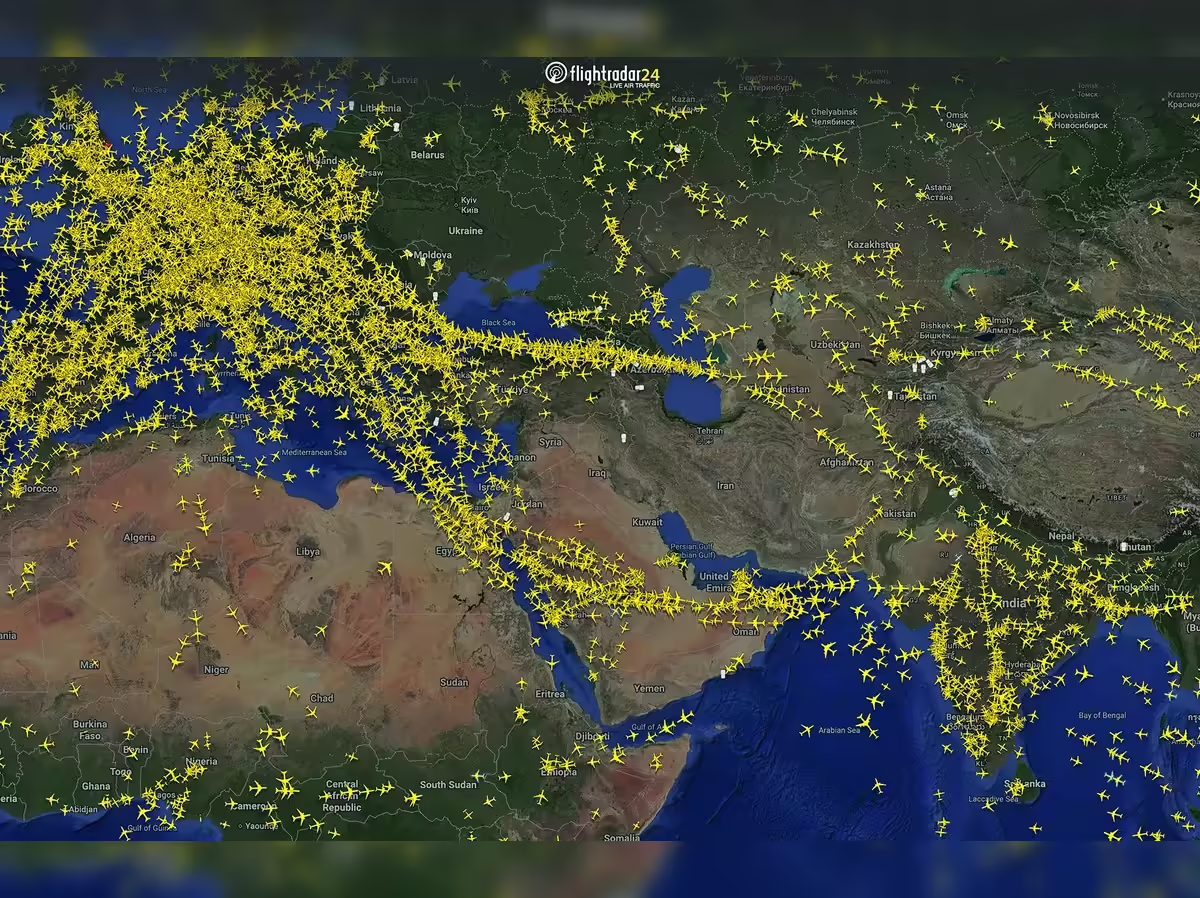
The ongoing conflict in West Asia has begun to significantly disrupt global aviation routes, with India emerging as one of the most affected markets. As key air corridors turn volatile or restricted, airlines are being forced to rethink routes, pricing, and operations—leading to higher fares, longer travel times, and widespread cancellations.
The Gulf: India’s Aviation Lifeline Under Stress
For decades, the Gulf region has served as the backbone of India’s westbound aviation network. Acting as the largest corridor connecting India to Europe and North America, it has enabled efficient, cost-effective travel. Airlines like IndiGo and Air India have heavily relied on these routes for international connectivity.
However, with West Asian airspace increasingly restricted due to the conflict, this critical aviation artery is now under severe strain.
Massive Operational Disruptions
The impact on Indian aviation has been swift and substantial:
• Over 700 flights were cancelled in the early phase of the conflict
• Nearly 2,500 flights were axed within three weeks
• Around 117 aircraft have been grounded nationwide
• Air India’s Dubai operations dropped sharply—from 35 weekly flights to about 10
The cascading disruptions have prompted rating agency ICRA to revise its outlook on the aviation sector from stable to negative, reflecting mounting operational and financial pressures.
Airspace Closures and Strategic Bottlenecks
The crisis is compounded by multiple airspace restrictions:
• Pakistani airspace remains shut to Indian carriers following geopolitical tensions
• West Asian airspace has seen at least 11 zones restricted by aviation authorities
These chokepoints have forced airlines to reroute flights over longer, less efficient paths, adding 3–4 extra hours to westbound journeys.
The Fare Shock
With longer routes and reduced operational efficiency, ticket prices have surged dramatically:
• Delhi–London: ₹35,000–45,000 → ₹85,000–₹1.2 lakh
• Mumbai–New York: ₹55,000–70,000 → ₹1.3–2.25 lakh
• Bengaluru–Frankfurt: ₹40,000–50,000 → ₹1.5–1.9 lakh
The rise in fuel consumption, crew costs, and limited capacity has directly translated into higher fares for passengers.
Changing Travel Patterns
Indian travelers are already adapting to the new reality:
• Bookings to Europe have declined sharply due to high costs
• Demand is shifting toward Southeast Asian destinations such as Thailand, Vietnam, Singapore, and Bali
• Domestic leisure routes—including Goa, Srinagar, and Leh—continue to see stable demand
This shift indicates a broader recalibration of travel preferences driven by affordability and accessibility.
Economic Impact on Airlines
The financial toll on Indian carriers is significant. Industry estimates suggest a hit of approximately ₹875 crore per week, driven by:
• Increased fuel burn due to longer routes
• Operational inefficiencies
• Reduced passenger volumes on high-yield international routes
The Road Ahead
The aviation sector now faces a period of uncertainty. Much depends on how long geopolitical tensions persist and whether airspace restrictions ease. In the interim, airlines will need to balance operational viability with passenger affordability, while travelers must brace for elevated costs and extended travel times.
What was once a seamless global travel network is now being reshaped in real time—highlighting how deeply interconnected geopolitics and aviation truly are.
